What Are the Consequences of Overconsumption on Our Lives?
3 minute read
We live in a society based on foundations of commerce and consumption and as individuals, it has never been easier to buy what we want, when we want it. We can even get groceries delivered to our door within 30 minutes. Yet, simultaneously, we face an ever-increasing issue with overconsumption. This is not a coincidence.
Overconsumption has become so normalised that we barely notice it happening. A quick scroll and a one-click purchase on our favourite website, or a sale that felt like saving money. Before long, our homes are full and yet something still feels off.
APDO member Suz Sawtell talks honestly about what overconsumption is actually costing us, because naming the problem is always the first step.

The emotional weight we don't talk about
Clutter is not just a physical problem, it is also an emotional issue.
Research consistently shows that living in a cluttered environment raises our cortisol levels, the stress hormone. Our brains are wired to process our surroundings and when our homes are overwhelming, our nervous systems feel it. We feel it as anxiety or as a low-level hum of unease we can't quite explain. It might also be that sinking feeling we get every time we walk in to a certain room. Overconsumption can also give rise to feelings of shame, thoughts of ‘I should have sorted this by now’ or hiding things when guests are due, because we don't want them to see what we've been buying. It might also be the feeling of guilt that quietly builds every time we buy something new, knowing there is no space for it.
Our home becomes a space that reflects the buying decisions we have made and often that provokes an uncomfortable emotional response in our bodies.
The physical weight in our homes
Our homes are meant to be places where we rest, relax and recharge. A soft landing at the end of a long day.
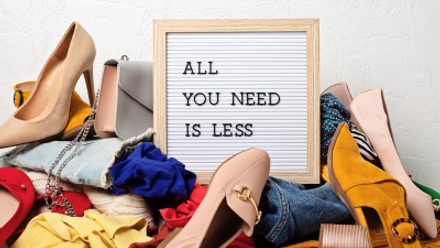
But when every surface is covered, wardrobes won't close, or the spare room has quietly become a storage room, that sense of sanctuary starts to disappear. We begin to move around our homes differently: avoiding certain rooms, closing certain doors, apologising for certain corners when people visit.
There is also the daily frustration of simply living in a space where things no longer fit. It may be a drawer that won't close, the cupboard we have to wrestle with or the wardrobe where getting dressed becomes a battle rather than a simple start to our day. These moments feel small in isolation but when they happen again and again, they accumulate into a kind of low-level exhaustion that is hard to name but very easy to feel.
The financial cost we rarely add up
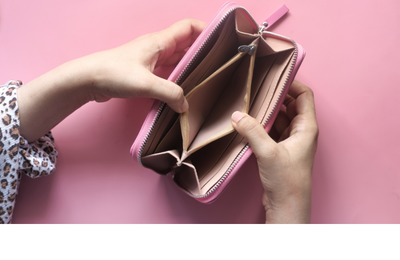
Overconsumption is expensive and not just in the obvious way.
Beyond the initial purchase sits a quiet, accumulating cost. We buy storage solutions to contain the overflow or duplicate items because we can’t find the original. We might have items still with tags on sitting at the back of cupboards or subscriptions still quietly charging.
When we start to look clearly at what overconsumption costs financially, it can be sobering. For many people, it adds another layer of shame onto an already heavy pile. Yet, these patterns often develop for very understandable reasons. Shopping can feel soothing, provides dopamine to calm the brain or fills a gap in our lives. It can offer a sense of control in moments when life feels anything but. Developing an understanding of why we overconsume, is just as important as recognising what it is costing us.

So where does this leave us?
This week, the APDO community is exploring not just the problem but the path forward — from letting go, to changing our relationship with consumption, to taking meaningful action.
But today, I simply want to invite you to pause.
If you struggle with overconsuming, I'd invite you to look around your home with curiosity rather than criticism.
Ask yourself: 'What is the clutter here actually costing me?'
You don't have to have the answers yet, but if something in this piece has resonated, that is worth paying attention to.
Awareness is where change begins.