Less Stuff, More Life: Mindful Choices That Create Peace
5 minute read
If you've followed this series throughout National Organising Week, we hope it has encouraged you to look at overconsumption with fresh eyes and without judgement.
Overconsumption isn't simply about the things we buy. It can show up not only in our homes, but also in our diaries, our inboxes and even our thoughts. It can quietly become part of the way we respond to stress, boredom, uncertainty or the desire to feel better in a busy world.
The good news?
The moment you begin to notice those patterns, change becomes possible.
To round off our 2026 campaign, APDO member Julie Stevens explores how awareness is where every lasting change begins.

The hidden cost of buying more than we need
Most of us have experienced that moment.
We spot something online, add it to our basket, click "buy now" and feel a brief sense of excitement. Yet a few days later the item arrives and somehow life feels much the same as it did before.
One purchase rarely causes a problem. It's the accumulation over time that creates the weight.
Overconsumption can quietly cost us our:
- Mental space as we try to remember what we've bought, where we've put it and what still needs organising.
- Physical space as cupboards become crowded, surfaces fill up and storage solutions multiply.
- Financial freedom through impulse purchases, duplicate items and subscriptions we barely use.
- Energy and attention as we manage, maintain, clean and organise more possessions.
And emotionally, it can leave us feeling frustrated, guilty or overwhelmed rather than content.
What promised relief often creates another layer of responsibility.
Understanding what's really driving the purchase
This isn't about blaming yourself or feeling guilty for spending money.
It's about becoming curious.
Most spontaneous purchases aren't really about the item itself.
They're often a response to something deeper.
Perhaps you're seeking comfort after a difficult day.
Perhaps you're bored, tired or feeling overwhelmed.
Perhaps you're looking for a small reward or trying to solve a problem quickly.
Perhaps you're responding to the subtle message that everyone else seems to have something you don't.
Before your next purchase, pause for a moment and ask yourself:
"What am I hoping this purchase will give me?"
And perhaps an even gentler question:
"What feeling am I trying to create - or avoid?"
You may be surprised by the answer.

Recognising your personal triggers
Take a moment to think about what tends to happen just before you buy something unexpectedly.
Common triggers include:
- Stress and overwhelm: "I need something to make today feel better."
- Reward and comfort: "I've worked hard. I deserve this."
- Boredom and distraction: endless scrolling and browsing.
- Comparison: "Everyone else seems to have one."
- Habitual spending patterns: payday, weekends or evening online shopping.
- Clever marketing and personalised recommendations.
- Uncertainty or indecision in other areas of life.
Which triggers resonate with you?
The goal isn't to eliminate every trigger.
It's simply to notice them before they take over.
Creating boundaries that support you
Once you understand your triggers, you can create a few simple rules that help you make more intentional choices.
Think of these as supportive boundaries rather than restrictions.
Why not choose one or two that feel realistic for your lifestyle and give them a try.
The 24-hour pause
If it isn't essential, wait 24 hours before buying. Many impulse purchases lose their appeal once the urgency has passed.
Don't decide when you're depleted
Avoid making purchasing decisions when you're tired, stressed or emotionally activated.
Replace, don't repeat
Before bringing something new into your home, consider whether it replaces an existing item or simply adds to the collection.
One in, one out
When something new comes in, choose something else to donate, sell or recycle.
Create category pauses
Take a 30-day break from buying within one category such as clothing, books, home décor or beauty products.
Ignore the sale trap
A discount doesn't create a need. If it wasn't part of your plan before the sale, it probably isn't part of your plan now.
Ask for evidence
Before buying, ask:
- Where will this live?
- When will I use it?
- What problem does it solve?
- What will it replace?
Spend intentionally
Build room in your budget for things that genuinely bring value and enjoyment. Planned spending often feels far more satisfying than impulsive spending.

A simple reset for trigger moments
When you feel the urge to buy, try this gentle pause:
- Notice it: "This is a trigger moment."
- Take a breath and step away from the decision.
- Redirect your attention. Have a drink of water, go for a walk, call a friend or write down what you're feeling.
- Come back later and decide from a calmer place.
The goal isn't restriction.
The goal is discernment.
To make choices that serve the life you want to create rather than the emotion you're feeling in the moment.
What you gain when you consume more mindfully
When you begin buying less intentionally and living more intentionally, the rewards reach far beyond your home.
More space
Clearer surfaces, calmer rooms and less visual noise.
More time and energy
Less organising, less tidying and less managing of possessions.
More financial freedom
More money available for experiences, future goals, generosity or simply greater peace of mind.
More contentment
A growing appreciation for what you already have.
More trust in yourself
Confidence that your choices reflect your values rather than someone else's marketing strategy.
And perhaps most importantly...
More life
More room for the people, experiences, hobbies, adventures and moments that truly matter.
"The price of anything is the amount of life you exchange for it."
Henry David Thoreau
That doesn't mean we should never buy anything. Rather, it invites us to pause and consider whether what we're bringing into our lives is adding genuine value, meaning and enjoyment, or quietly demanding more of our time, money and attention.

A final thought
You don't need to become a minimalist.
You don't need to stop buying things altogether.
And you certainly don't need a perfect system.
What you need is a small, repeatable habit that helps you pause, reflect and choose with intention.
This week, choose just one mindful purchasing rule and see what happens.
Notice how it feels.
Notice what changes.
Notice what becomes possible when there is a little less stuff and a little more space for life.
Because often the greatest gift isn't what we bring into our homes.
It's what we make room for.
Throughout this week we've explored the impact of overconsumption on our homes, finances, wellbeing and peace of mind. My hope is not that you'll buy less out of obligation, but that you'll choose more intentionally. Because when we consume mindfully, we create room for the things that matter most.
An APDO professional declutterer and organiser can help you look at your home and life with fresh eyes and without judgement.
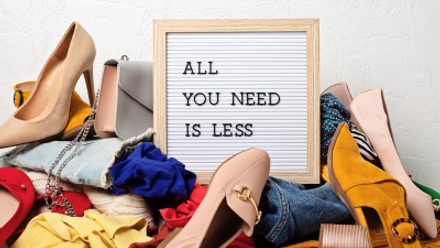
Less Stuff. More Life.