Responsible ways to Donate, Reuse, Repair & Recycle in the UK
6 minute read
Sometimes the hardest part of the decluttering journey is knowing what to do with the clutter afterwards. Few people want to see their unwanted items end up in landfill, so in yesterday’s blog we explored ways to sell, donate and recycle. Today, APDO member Victoria Fearnley is looking at more specific ways to reduce waste by helping our belongings last longer or be disposed of in the most sustainable way possible.

Donating sustainably
An increasing problem for charity shops across the country is the amount of unusable (and unsellable) donations being dropped off every day. Clothes often arrive dirty or in poor condition, alongside unwanted or overly bulky items that many high street shops simply do not have space to store. The most sustainable way to donate is to check with the charity shop before dropping items off. That way, you’ll know your donation can genuinely be resold to raise money for the charity — and that you’re not unintentionally adding to their waste disposal costs.
Here are three examples of sustainable ways to donate items that charity shops often struggle to accept:
Pens & pencils
Most households have a stash of random pens and pencils scattered around — especially those with children. While charity shops don’t typically want mismatched collections of stationery, you can give them a second life by donating them to Pens for Kids UK. The charity redistributes pens and pencils to children who may not otherwise have access to these essential writing tools.
Bras
Instead of throwing old bras into landfill, consider donating or recycling them through specialist charities that help reduce textile waste while supporting important causes. Bras that are still in good condition can be donated to Smalls for All, a charity that distributes underwear to women and children in disadvantaged communities across Africa. For bras that are worn, damaged or no longer wearable, Against Breast Cancer’s Bra Recycling Scheme accepts bras in any condition, helping divert textiles from landfill while raising funds for breast cancer research.
Soft toys
Charity shops are often inundated with soft toys, so what can you do with any surplus? Consider a company called Loved Before, which runs a sustainable soft toy adoption agency for pre-loved teddies. Visit their website for details on how to send your old soft toys (in any condition) for a “spa” treatment and a new life. It can also be a lovely way to help children learn to let go of some of their much-loved softies.
Re-purposing & upcycling to extend product life
The longer we can keep our belongings in circulation and in use — either by ourselves or others — the lower their impact on the environment. With a little imagination (or a quick internet search), most household items can be reinvented rather than thrown away. An old bread bin can become a flowerpot, glass jars can be reused for homemade preserves or candle holders, and an old T-shirt can be turned into cleaning cloths.
If arts and crafts are not for you, local schools, community groups and clubs may be delighted to take unwanted materials for projects and activities. Local Facebook groups are also a great way to connect with people looking for specific items — whether that’s plastic bags for crocheting into reusable bags (yes, it’s a thing!), empty food cans that can be transformed into pen holders or herb planters, or old Christmas cards that can be crafted into new ones.
Repairing broken items instead of throwing them away
Repair cafés, local Men’s Sheds and DIY workshops are becoming increasingly popular and exist all over the country, so check local Facebook groups or ask around in your community. These organisations may even accept donations of broken items — particularly furniture and electricals — so even if you don’t want to repair something yourself, you may still be able to save it from ending up in landfill.
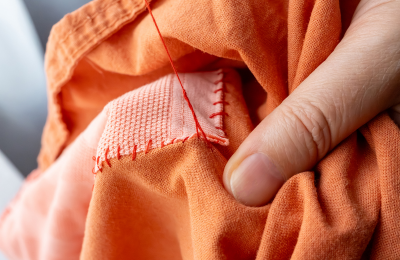
When it comes to textiles and clothing, it’s especially important to try to extend each item’s life, as textile production requires huge amounts of water, energy and raw materials. The fashion industry is also responsible for significant carbon emissions and generates millions of tonnes of waste each year, with many garments ending up in landfill or being incinerated long before they are truly worn out.
Do you have a family member or friend who is handy with a needle? Ask for help with simple repairs — or why not have a go yourself? Online tutorials and evening classes can be a great way to build confidence in basic sewing skills.
If you simply haven’t got the time, or DIY isn’t for you, there’s plenty of professional help available. We Are Repairs bring repair specialists together in one place: simply type in what you want repaired, along with your postcode, and it will show nearby providers.
Recycling done properly
While many people are well-informed about what can go into their household recycling bins, there will always be categories of items we’re less sure about. At Recycle Now you can enter the item you want to recycle, along with your postcode, and it will tell you where it can be recycled locally.
Another excellent resource is Terracycle, which specialises in hard-to-recycle items. Its website lists a range of free recycling programmes for all sorts of products, such as Pringle tubes, water filters and coffee pods.
Confusing recycling categories

Medication
Unused, unopened and out-of-date medicines should always be returned to pharmacies for safe disposal. Cardboard packaging and paper inserts can be recycled at home, while blister packs can be accepted through specialist collection schemes. On the High Street, Boots and Superdrug both offer blister pack recycling schemes, and Boots also rewards customers with points for participating. Some Boots stores additionally collect certain brands’ empty beauty and cosmetics packaging.
Note that inhalers should never be put in household waste bins, as they contain gases that are harmful to the environment. Instead, they can be returned to pharmacies for recycling. Medicines should also never be flushed down the toilet.
Old CDs, DVDs & VHS tapes
While many charity shops still accept CDs and DVDs, older forms of media can be harder to dispose of sustainably. Fortunately, there are specialist companies that will take them. RCS Vintage Media Collection Service accepts VHS tapes and similar media for reuse or recycling, either via courier or in person across parts of the North East and beyond.
If you’d like to make some money back from your collection, Sell Retro also buys vintage media and offers free collection in parts of Essex, Suffolk, East London and surrounding areas, as well as courier options further afield.
Clothes hangers
Many clothing retailers now collect unwanted plastic hangers in-store so they can be reused or recycled. Supermarkets and fashion retailers such as Sainsbury’s and Tesco have hanger return schemes at checkouts. Good-quality hangers can also often be donated to charity shops, schools, theatre groups or community clothing banks.
Avoid putting plastic or mixed-material hangers in household recycling bins unless your local council specifically accepts them, as they can jam sorting machinery.
A final thought
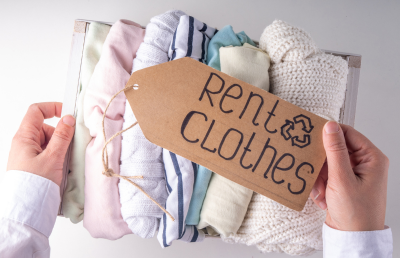
Perhaps the most important step of all is tackling overconsumption in the first place. Borrowing instead of buying, buying fewer items — and choosing better-quality products when you do buy — ultimately means less to donate, repair or recycle in the future.
Eco-anxiety is also worth bearing in mind. If the long list of suggestions above feels overwhelming, simply choose one thing to incorporate into your life and build from there. Every small step helps.
When it comes to sustainable decluttering, there are also APDO-backed Professional Organisers across the country who are well-connected both within their communities and with each other, and who can offer support and guidance along the way.