
From Summer Chaos to September Calm: A Gentle Reset for Family Life
7 minute read
August and September can feel a little like a second New Year. After the slower, more flexible rhythm of summer, there is often a sense of relief as familiar routines begin to return. But that relief can quickly disappear beneath a flurry of school forms, packed lunches, forgotten PE kits, work commitments, clubs, appointments and endless notifications. Suddenly, everyone needs to be somewhere, wearing something and carrying the right equipment - usually at the same time. And, all too often, one person is expected to keep track of it all.
If family life feels a little chaotic as the new term begins, you do not need to overhaul your entire home or create a perfect routine overnight. A gentler approach is usually much more effective. By introducing a few simple systems - built around the way your family actually lives - you can reduce the daily decision-making, share the mental load and make the weeks ahead feel calmer and more manageable.
APDO member Julia Jamieson says, "Think of it as a family reset, rather than a fresh start. You are not beginning from scratch: you are simply adjusting your routines to support this new season of family life". Julia shares her 6 strategies to help you master your own family reset.
1. Start with a family ‘What’s coming up?’ session
When family life gets busy, it is often because no one has a clear picture of what is happening - or one person is carrying the entire schedule in their head. A short family planning session can help everyone understand what is coming up and reduce those last-minute surprises.
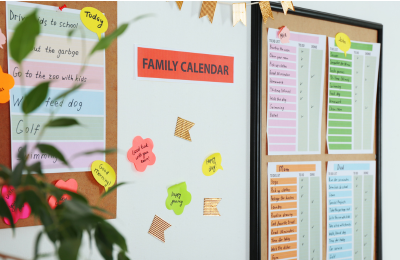
Bring everyone together for 15 minutes and look at the week ahead. Add school dates, clubs, appointments, work commitments and social plans to one shared calendar, whether that is a paper planner on the wall or an online calendar everyone can access. Check for clashes, transport arrangements and anything that needs to be booked, completed or bought.
This is also a good opportunity to involve children in the planning. Younger children can check what they need for school, while older children can take more responsibility for adding activities, remembering equipment and letting everyone know when plans change. They may still need reminders, but gradually sharing responsibility helps build independence and reduces the pressure on one person to remember everything.
Keep the session short and practical. The aim is not to create a perfectly planned week, but to make sure everyone knows what is happening and what they are responsible for. One visible, reliable source of information can make family life feel much calmer - and free up valuable headspace.
2. Create a simple weekly rhythm
A helpful family routine does not need to be a rigid timetable where every hour is accounted for. In fact, routines are more likely to last when they include some flexibility. Instead, think about creating a simple weekly rhythm, with a few regular touch points that help everyone know what needs to happen and when.
You might choose Sunday for reviewing the calendar and preparing for the week ahead, Monday for checking school messages, Wednesday for making sure activity kits are clean and ready, and Friday for emptying school bags and dealing with any paperwork. These small weekly anchors prevent tasks from building up and reduce the number of last-minute panics.
Build your rhythm around the way your family actually lives, rather than the version of family life you think you should have. Consider work patterns, school clubs, energy levels and the evenings when everyone is already stretched. If Tuesdays are particularly busy, for example, that may be the night for an easy dinner rather than an ambitious household reset.
Most importantly, leave some breathing room. Forgotten homework, unexpected appointments and tired children are all part of real family life. A good weekly rhythm should support your family through the busy moments - not make you feel as though you have failed whenever plans need to change.
3. Give paperwork somewhere to land
School paperwork has a habit of appearing everywhere: crumpled at the bottom of bags, left on the kitchen worktop or buried beneath a stream of emails and app notifications. Without a clear system, it is easy to miss a permission slip, payment deadline or important date.

Create one designated place for paperwork that needs your attention, such as a tray, basket or folder in a convenient spot. Keep the system simple by sorting papers into three categories: action, file and recycle. Then choose a regular time each week to work through the action pile, add dates to the family calendar and file or recycle anything you no longer need.
Digital paperwork needs a home too. Consider creating a dedicated email folder or label for each school, then flag messages that require action. Once you have dealt with an email, archive it so your inbox does not become another overwhelming to-do list.
The aim is to create one reliable place where information lands and one regular time when it gets processed. That small habit can prevent paperwork from spreading around the home - and stop important tasks from getting lost in the everyday busyness of family life.
4. Share the family workload
Keeping family life running involves far more than completing visible household tasks. There is also the mental load of remembering appointments, checking school messages, planning meals, organising transport and noticing when PE kits need washing or supplies are running low. When one person carries the cognitive load, it can quickly become exhausting.

Start by making the workload more visible and discussing what everyone can take responsibility for. Children can help in age-appropriate ways, from filling water bottles and laying the table to checking their sports kit, putting clean clothes away or preparing their school bag for the next day. Older children may be able to manage their own activity schedules, make simple lunches or add important dates to the shared calendar.
Where possible, give each person a few regular responsibilities rather than asking for help only when things become overwhelming. Consistent jobs are easier to remember and gradually become part of the family’s routine.
It may take children longer to complete a task - and they may not do it exactly as you would - but that is part of building confidence and independence. Let’s create a home where everyone contributes!
5. Build in a weekly reset
Even with good routines in place, family life can quickly become untidy and disorganised as the week unfolds. A short weekly reset gives everyone a chance to catch up, look ahead and start the new week feeling a little more prepared.
Set aside 20–30 minutes at a time that works for your family - perhaps on a Sunday afternoon or after dinner. Use this time to:
- Review the family calendar
- Check school bags and paperwork
- Prepare uniforms and activity kits
- Plan a few simple meals
- Restock lunch-box essentials
- Confirm transport arrangements
- Identify the main priority for the week ahead
This does not need to become another large household task. Keep it simple, involve the whole family and focus only on what will make the coming week easier. You could put on some music while everyone completes their jobs, then enjoy a favourite snack or family film afterwards.
A weekly reset will not prevent every forgotten form or last-minute change, but it creates a regular pause before the busyness begins again. That small investment of time can make the week feel calmer, clearer and much more manageable.
6. Expect your systems to evolve
Even the best family routine may need a little fine-tuning once real life takes over. What looks manageable on paper might feel too complicated in practice, while an unexpected change to work, school or activities can quickly alter what your family needs.
Give any new system a couple of weeks, then review it together. What is working well? Where are things still getting forgotten? Is there a step everyone keeps avoiding? If something feels difficult to maintain, simplify it. A system should make family life easier, not create another task to manage.
Remember that every family is different. Routines may need to accommodate changing work patterns, energy levels, neurodiversity and children’s ages or stages. What works brilliantly for one household may not suit another - and what works for your family now may need to change again next term.
Organisation isn’t about finding one perfect routine and following it forever. It is about creating flexible systems that support your family as life changes. Keep what helps, adapt what almost works and let go of anything that adds more pressure than it removes.
Aim for calmer, not perfect
Remember, getting back into a family routine after the summer holidays doesn’t require a complete overhaul. Trying to change everything at once will often create more pressure, so start with the part of family life that currently causes the most stress. That might be hectic mornings, school paperwork or the endless search for PE kits.
Choose one small system to introduce this week and give your family time to adjust. Simple habits that everyone can follow will create far more calm than an ambitious routine that is abandoned after a few days.
Just as summer called for a more flexible approach, the new term needs routines that support your family as it moves into a different season. No system has to last forever - it simply needs to work for your family right now.
And if family life still feels overwhelming, an APDO professional organiser can offer practical, non-judgemental support with household organisation, routines, paperwork and life admin - helping you create systems that make everyday life feel lighter and more manageable.