Eco-anxiety: How sustainable decluttering can be both challenging and supportive
3 minute read
Eco-anxiety is a term that is increasingly used to describe the feelings of worry, guilt, overwhelm or helplessness that many people experience when thinking about climate change and environmental damage. It can show up in different ways: concern about the future, fear of doing the “wrong” thing, or a constant low-level unease about our impact on the planet.
For some, these feelings surface particularly strongly at home, when we are faced with cupboards, lofts or spare rooms full of items we no longer use but don’t quite know what to do with.
APDO member Kate Yiannacou and fellow members of APDO’s Sustainability Special Interest Group (SIG) share their thoughts on how to deal with eco-anxiety while also making space in your home.

Clear the clutter, calm your mind
Decluttering is often presented as a simple route to wellbeing: clear your space and you’ll clear your mind. There is some truth in this. Our homes can become heavy with visual noise, unfinished decisions and reminders of past purchases or intentions. Clearing space can give us breathing room, both physically and mentally. It can help reduce stress, improve focus and create a calm environment in which we feel more able to think clearly and make thoughtful choices – including about sustainability.
From this perspective, decluttering can be a supportive response to eco-anxiety. When our space feels calmer and more intentional, we may feel more empowered to take positive, impactful steps such as buying less, choosing better quality items, repairing what we have, or supporting local and circular economy initiatives. A decluttered home can make our sustainable intentions more visible and achievable.
Getting stuck trying to get it right
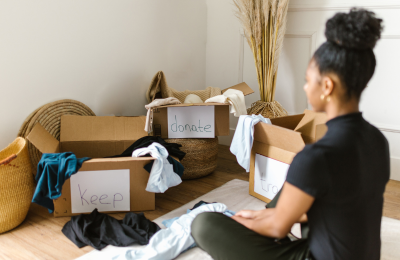
However, for many people, the process of decluttering itself can actually intensify eco-anxiety. Trying to declutter “sustainably” often brings its own set of challenges. We want to do the right thing by the planet, so we worry about every decision: Can this be recycled? Is it reusable? Who might want it? How do I get it there? We may feel uncomfortable letting anything go without finding the “best” possible route out, and that can take time, energy and emotional capacity.
Sustainable decluttering is rarely quick. Researching recycling schemes, arranging drop-offs, photographing items for donation or resale, and storing bags while we wait for the right opportunity can turn decluttering into a long, drawn-out process. For those already feeling overwhelmed, this can lead to decision paralysis. Items linger, clutter remains and the sense of being stuck can increase rather than reduce anxiety.
Letting go of the guilt as well as the clutter
There is also the emotional weight of confronting past choices. Items that we bought not realising they weren’t very eco-friendly, or that we bought and simply haven’t used and now feel wasteful can bring up feelings of guilt that can leave us stuck. This is why balance is so important. Decluttering needs to be done in a way that is sustainable not only for the planet, but for our mental health too. Sometimes, progress looks like making thoughtful, imperfect decisions rather than getting stuck searching endlessly for the ideal solution. It might mean setting limits on how much time and space we give to items we no longer need, or accepting that we can’t personally save everything from landfill.
No need to do it alone
Support can make a huge difference. APDO members are able to understand both the practical and emotional complexities of letting go. Many are experienced in helping clients navigate eco-anxiety with compassion, offering realistic, informed advice on sustainable routes for possessions while keeping the client’s wellbeing at the centre of the process. They can also support you with coming up with practical systems to help you stay organised in the future and so you can stay closer to your sustainability values going forward.

Within APDO, the Sustainability Special Interest Group (SIG) brings members together to share ideas, resources and inspiration around more sustainable ways of working. This collaborative approach helps ensure organisers can guide clients with up-to-date, thoughtful options, while also recognising when “good enough” is the healthiest choice.
If you find yourself caught in a loop of wanting to clear your home but feeling stuck by the pressure to do it perfectly, you’re not alone. Reaching out for support can help you move forward with clarity and kindness – for yourself and for the planet.
You can find a professional organiser local to you here, someone who can help you declutter more sustainably, at a pace and in a way that truly supports you.