
Why Hoarding Support Needs to Change – And How We Can Do It Better
4 minute read
Last week marked the 12th National Hoarding Awareness Week. This year, the campaign focused on something many people affected by hoarding have been calling for: national guidelines for hoarding support and, just as importantly, a shared understanding of what “good support” looks like from the perspective of those who need it most. The conversation has been gaining momentum since the first-ever debate on hoarding disorder in the UK Parliament last October, led by MP Paulette Hamilton. It was an important and long overdue moment.
Why national guidelines matter
For anyone living with the impact of hoarding and excessive clutter, and for the loved ones, neighbours and professionals trying to help, finding the right support can feel confusing and overwhelming. Access to help varies widely across the country and support is often only available at crisis points such as hospital admissions, eviction processes or safeguarding concerns.
Hoarding disorder was only officially recognised as a mental health condition in the UK in 2018. Current estimates suggest that between 2.5% and 6% of the population live in hoarded homes, which is the equivalent of more than four million households (Postlethwaite, Kellett & Mataix Cols, 2025). This is widely believed to be an underestimation though, as shame and stigma prevent many people from seeking help.
Research indicates that hoarding affects men and women in equal numbers, although women are more likely to seek support, as is the case with many mental health conditions. While the average age at which people seek help is around 50, hoarding behaviours often begin much earlier, sometimes in childhood or adolescence, and gradually become more entrenched. The human and financial costs can be significant.
Current data suggests that hoarding affects more people in the UK than obsessive compulsive disorder (OCD) and schizophrenia combined. More than 90% of those with hoarding disorder also have at least one other mental health diagnosis (Archer et al., 2019).
This is not a small issue.
Despite its prevalence and impact, people affected by hoarding still face inconsistent, unclear and often harmful responses. Clearance-based approaches remain common in many areas. While once considered helpful, we now know they cause distress, erode trust and dignity, fail to address the underlying reasons for the behaviour and often trigger “backfilling”, where items are rapidly acquired again.
National guidelines would help create a fairer, safer and more effective approach for everyone involved.

Understanding the person behind the ‘stuff’: what good support looks like
Effective hoarding support is never simply about removing belongings. It is about understanding the person behind them. Hoarding is complex, deeply personal, and often linked to trauma, grief, neurodivergence or long-term mental health challenges. For many people, it is a coping mechanism that has become overwhelming.
It is important to remember that someone living with hoarding behaviours may not see their situation as a problem, even when others are concerned. People often come to the attention of services because neighbours, family members or friends raise concerns, rather than through self-referral. Low motivation, fear of judgement and worries about losing control can all play a part. Shame is also a powerful barrier that makes it harder to ask for or accept support.
Good support is personalised and built on trust. It must take into account each individual’s story and circumstances, including the experiences of those affected by the hoarding. People need to feel safe, respected and genuinely listened to before any practical work can begin. Without that foundation, even well-intentioned help can feel intrusive or threatening.
Effective support is collaborative and combines therapeutic and practical input. No single service can meet every need. Support works best when agencies work together and keep the individual at the centre. This is where professional organisers, with relevant skills, training and a trauma-informed approach, can play a valuable role. They can support people in complex situations, but also in early intervention and ongoing aftercare, which are essential for maintaining progress and preventing relapse.
Professional organisers: an option to consider
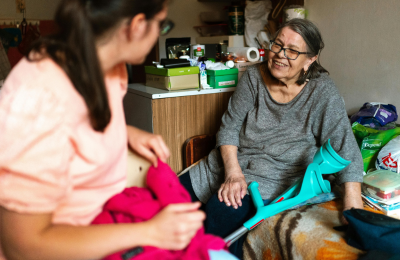
APDO-registered organisers bring a wide range of skills and specialisms, including experience with hoarding behaviours. Hoarding-informed organisers provide calm, practical and non-judgemental support, helping someone make changes in their home at a pace that feels safe and manageable.
Safety is a key focus. This may involve creating clear walkways, improving fire safety with input from fire services, or making essential areas more accessible. These steps can be taken without pressuring someone to discard items before they are ready.
Professional organisers collaborate with other services and can help reduce pressure on family members who may be struggling to support their loved one. Their role is not to “clear a space”, but to work alongside the person to develop self-awareness, strengthen skills and confidence, and restore functionality. They focus on building a trusting relationship and offering encouragement, structure and emotional steadiness during what can be a challenging and emotionally charged process.
Looking Ahead…
Awareness of hoarding is growing, and with it comes an opportunity to rethink how support is offered. National guidelines would bring much-needed consistency, but the heart of good practice remains simple: work with people, not against them. Professional organisers can contribute to this by offering steady, practical, person-centred support that complements the work of other services and helps people move forward in a way that feels safe and sustainable.